Alcohol and Sleep: Why Nightcaps Can Backfire
Feeling sleepy after a drink does not mean you will sleep well. Alcohol can change sleep and breathing even when falling asleep feels easy. The useful choice is to avoid using it as a sleep aid, not to find a magic dose or bedtime cutoff.
Look at the whole night, not just the first few minutes
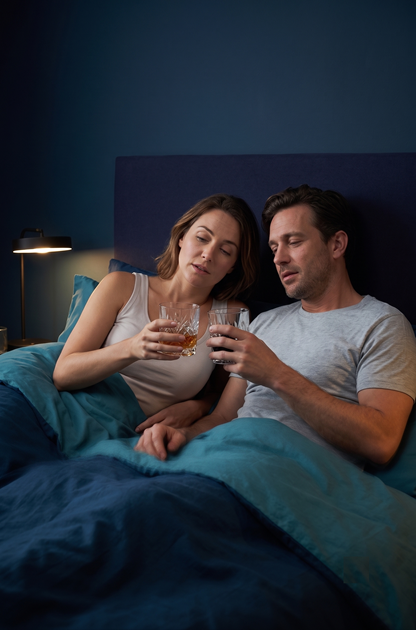
A nightcap is a drink taken near bedtime to help with sleep. It can feel like a solution because the earliest effect is the easiest to notice. But “I fell asleep quickly” says little about the rest of the night.
Evening: you may feel more relaxed
The calming feeling can become part of a bedtime habit. It is not evidence that alcohol is treating the reason you cannot sleep.
Early sleep: the pattern may change
Falling asleep and the balance of sleep stages can change. The effect depends on the amount consumed and the person, not just the time on a clock.
Later in the night: waking may interrupt sleep
Some people notice lighter sleep or early waking. Bathroom trips, discomfort and breathing problems can also contribute. This does not happen at one predictable hour.
Morning: time in bed is only part of the story
Notice whether you feel sleepy, unwell or unable to concentrate. Do not drive or do hazardous work if you are impaired, even after a full night in bed.
The connected circles show sequence, not exact hours, risk levels or a measured sleep recording. The later-night pattern is described in Ebrahim and colleagues' review; the newer evidence summary below explains its limits.
The sleep you remember and the sleep pattern are different things
You do not need to learn a long list of brain terms. Keep two questions separate: Did I fall asleep easily? and What happened while I was asleep?

REM sleep can change
REM is a stage associated with vivid dreaming. Alcohol can delay its first appearance and reduce its duration. You cannot work out your REM minutes from how quickly you fell asleep. Read the 2025 evidence review.
The coloured traces are illustrative, not real brain recordings or a before/after measurement.
Later waking is possible
A person may wake more or earlier after drinking, but the picture alone cannot tell us why. Noise, stress, pain, timing and an existing sleep problem can overlap.
The clock in the image is a scene detail, not a prediction that alcohol will wake everyone at 4 am.For the underlying stage definitions, see Sleep Cycles Explained. A wearable stage estimate is not a way to calculate how much alcohol is safe for your sleep.
Restlessness, bathroom trips and breathing deserve separate attention

Feeling unsettled as the effects fade
Some people feel anxious or restless after the calming effect passes. That experience is different from diagnosing alcohol withdrawal. Persistent or severe symptoms need medical advice.
The heart graphic is symbolic. It does not measure heart rate or identify a medical condition.
Snoring and interrupted breathing
Alcohol can worsen breathing during sleep, particularly in people who snore or have obstructive sleep apnea, where the airway repeatedly narrows or closes during sleep. A partner noticing gasping or pauses is a reason to seek assessment.
The traces are not patient data. This image and article cannot diagnose sleep apnea.Bathroom trips are another possible contributor. Alcohol can increase urine production. Thirst, stomach irritation and restlessness can add to a rough night; they should not all be labelled “lost REM.” See NIAAA's explanation of hangover contributors.
A review of 14 controlled studies on sleep breathing found more breathing events and lower oxygen levels after alcohol on average. Effects were larger in snorers and people with diagnosed apnea. These group findings cannot tell an individual whether tonight is safe.
Some findings are clearer than others
A 2025 review of 27 studies in healthy adults gives a more careful picture than “alcohol always helps you fall asleep and always wakes you later.”
| Question | What the review found | Practical meaning |
|---|---|---|
| Does REM change? | The first REM period started later and total REM time was shorter. Higher doses caused greater disruption; changes also occurred at lower studied doses. | Feeling only mildly affected does not prove sleep is unchanged. |
| Is falling asleep faster reliable? | Falling asleep sooner was observed only at high studied doses. | This is not a benefit to pursue by drinking more. |
| Will everyone wake more or sleep less? | There was substantial uncertainty about total sleep time, the share of time in bed spent asleep, and time awake after first falling asleep. | Do not turn an average or a possible pattern into a personal prediction. |
“Healthy adults” does not cover every medical condition, pregnancy or alcohol dependence. The study does not establish a universal sleep-safe dose or cutoff time.
How much, how late, and how used to it are you?
These factors should not be collapsed into “I know my limit.” A glass describes a container, not a consistent alcohol amount. A large pour, a stronger beer or a mixed drink may contain more alcohol than you expect. NIAAA explains why serving size and strength both matter; its examples use US standard-drink units, not a sleep-safe allowance.

Timing is context, not a clearance test
Drinking with dinner and drinking at lights-out are different situations. But a gap of two, three or four hours cannot guarantee normal sleep or that alcohol has cleared.
The dinner setting does not establish a safe interval before sleep, medicine or driving.
Look at the serving, not just the glass
When recording what you already drank, note the volume, strength on the label and any refills. Do not use how sober you feel as the measurement.
The line is decorative, not a dose-response chart, personal limit or safe zone.Tolerance does not mean protection
With repeated use, a person may need more alcohol to feel the same effect. That can encourage increasing use without fixing the sleep problem. If the nightcap has become something you rely on, ask for help with the sleep concern and alcohol use together. NIAAA on alcohol use and sleep disorders.
Water and a different drink do not undo alcohol's effects

Water may help thirst, not restore sleep stages
Hydration does not cancel alcohol's effects on the brain, breathing or sleep. Drinking a lot of fluid just before bed may also add bathroom trips.
Water is not an antidote, an alcohol-clearance method or permission to drive.
No alcoholic drink is a sleep treatment
Wine, beer and spirits all contain alcohol. Choosing a different type does not establish a sleep benefit. Check the label when choosing an alcohol-free alternative too.
The pictured drinks are examples, not recommendations or a ranking of safer products.For sleep, the useful alternative is a routine that does not depend on alcohol. Coffee, a cold shower or a reassuring wearable score cannot make an impaired person fit to drive. NIAAA explains why common “remedies” do not reverse the effects.
Check these situations before a sleep experiment
Sleep, anxiety, pain or allergy medicines
Alcohol can dangerously increase drowsiness and slow breathing with some medicines, including opioid pain medicines and sleeping pills. Problems can occur even when they are taken at different times. Ask a pharmacist or prescriber; do not skip prescribed medicine to make room for alcohol. Check medication interactions.
Pregnancy or trying to become pregnant
There is no established safe alcohol amount or safe time during pregnancy. A sleep-related cutoff is not an exception. Discuss alcohol use and sleep concerns with your maternity professional. CDC pregnancy guidance.
Loud snoring, gasping or breathing pauses
Do not try to solve these only by moving your last drink earlier. Arrange a sleep assessment, especially when daytime sleepiness affects safety. If you already have apnea treatment, keep following your prescribed plan.
Needing alcohol to sleep or feeling unwell without it
A regular need for a nightcap deserves nonjudgmental support. If you may be dependent or have withdrawal symptoms, get medical advice before cutting down suddenly. Seizures, hallucinations or severe confusion require emergency care. Recognize withdrawal warning signs.
Children, teenagers and people with significant health conditions should not use this adult guide to make drinking decisions. This page offers no dose recommendation, detox schedule or fitness-to-drive test.
Give the evening a clear ending without a nightcap
First identify what the drink was doing for you: marking the end of work, filling a quiet moment, easing worry, or helping you avoid lying awake. A replacement is more practical when it serves that same everyday purpose.
- For a gentle transitionPut work aside and read something undemanding or listen to quiet music. Choose something easy to repeat, not another task to perform perfectly.
- For a familiar evening ritualChoose a small caffeine-free, alcohol-free drink you enjoy. The ritual is the point; it is not a sedating treatment.
- For thoughts that keep circlingWrite down tomorrow's first task or talk through a concern earlier in the evening. Persistent anxiety or insomnia may need more support than a bedtime habit.
NHLBI recommends calm wind-down habits and usually recommends cognitive behavioural therapy for insomnia, or CBT-I, first for long-term insomnia. It is a structured treatment, not simply a list of sleep tips.
Need a practical plan for lying awake?
Start with the calm, non-alcohol steps in our existing guide. It separates an occasional difficult night from a persistent pattern that deserves care.
Read the wind-down and awake-in-bed guideCompare ordinary nights without creating a drinking test
Only use this plan if you can safely avoid alcohol. If you drink heavily or regularly, have had withdrawal, or are unsure about dependence, speak to a clinician first. Do not suddenly stop just to complete a sleep log.
For other adults, use a simple seven-night alcohol-free observation. Seven nights is a practical recording window chosen for this guide, not a treatment duration or a promise of recovery. Do not drink again deliberately to “prove” a comparison.
- Before starting
- Note your recent pattern from memory: drink type, approximate serving and timing, bedtime, waking and how mornings felt. No new drinking baseline is needed.
- Each evening
- Keep your usual sleep opportunity and chosen wind-down habit reasonably consistent. Note changes in caffeine, late meals, stress, illness or medicines; do not alter prescribed treatment for the experiment.
- Each morning
- Record estimated time to fall asleep, remembered awakenings, final wake time, bathroom trips and how alert you feel. You do not need a wearable or an exact sleep-stage score.
- At the end
- Look for a repeatable pattern, not one perfect night. Improvement may suggest alcohol was contributing; it does not prove the only cause. No improvement does not make alcohol a suitable sleep aid.
Do not wait for day seven if you become unwell, notice possible withdrawal, or have unsafe sleepiness or breathing symptoms. Persistent sleep difficulty also deserves help. Sleep may take longer to settle after sustained heavy drinking, and that situation needs an individual care plan.
Alcohol and sleep, in plain English
Does alcohol help you sleep?
It can make you feel sleepy, but that is not the same as reliable, good-quality sleep. Do not use alcohol as a sleep aid. If you feel unable to sleep without it, ask a healthcare professional for help with both sleep and alcohol use.
How long before bed should I stop drinking?
No single number of hours guarantees normal sleep, alcohol clearance or fitness to drive. Avoid treating a two-, three- or four-hour gap as a safety test. For sleep, focus on an alcohol-free routine rather than a timing rule; people at risk of withdrawal need medical support before making a sudden change.
Why do I wake at 4 am after drinking?
Later waking can have several contributors, including alcohol's fading effects, bathroom trips or disturbed breathing. There is no universal 4 am rebound time, and one awakening does not prove its cause. Repeated gasping, breathing pauses or unsafe daytime sleepiness deserve assessment.
Does water cancel alcohol's effects on sleep?
No. Water may help with thirst, but it does not reverse alcohol-related sleep changes or make you safe to drive. Coffee, a shower and a sleep calculator cannot provide that assurance either.
Is red wine a better sleep aid than beer or spirits?
No alcoholic drink is an established sleep treatment. A familiar drink or a smaller glass does not prove that the alcohol amount is low or that the night will be unaffected.
Should I stop suddenly if I drink every night?
If you drink heavily or regularly and may be dependent, have had withdrawal before, or develop shaking, sweating or nausea when you cut down, seek medical advice before a sudden change. Do not use this article as a home detox plan. Seizures, hallucinations or severe confusion need emergency care.
Sources and review notes
- Gardiner et al. (2025): The effect of alcohol on subsequent sleep in healthy adults. Systematic review and meta-analysis.
- Kolla et al. (2018): The impact of alcohol on breathing parameters during sleep. Systematic review and meta-analysis.
- Ebrahim et al. (2013): Alcohol and Sleep I. Earlier review used for the possible whole-night pattern, not precise prediction.
- NIAAA: Hangovers.
- NIAAA: What Is a Standard Drink? US serving examples; not a safe-drinking prescription.
- NIAAA: Harmful Interactions, Mixing Alcohol With Medicines.
- NIAAA: Understanding Alcohol Use Disorder.
- NIAAA: Alcohol Use Disorder and Common Co-occurring Conditions.
- NIAAA: Understanding the Dangers of Alcohol Overdose.
- MedlinePlus: Alcohol Withdrawal.
- CDC: About Alcohol Use During Pregnancy.
- NHLBI: Insomnia Treatment.
- Government of India: Emergency Response Support System, 112.
Sources checked on 1 September 2026. This is educational content from the Sleep Manager Team; it is not presented as individual medical review. The timeline is an explanatory sequence, not patient data. Illustrations are not clinical evidence or a record of an individual's sleep. The seven-night observation is a practical suggestion for suitable adults, not a validated test or alcohol treatment.